
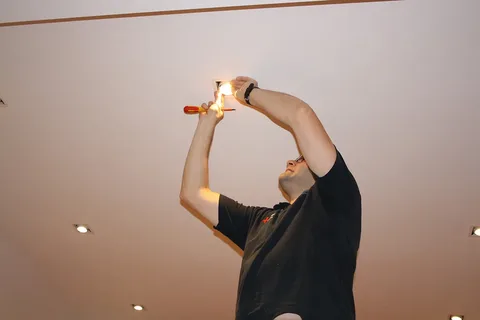
Flickering lights are not just a temporary inconvenience but expose you to increased risks of electrical hazards. The causes may include voltage fluctuations, loose connections, faulty wiring, overloaded circuits or an outdated electrical system. You may need to tighten the connection, replace the holder or the switch or update the wiring. Fixing flickering lights reduces energy waste, improves energy efficiency, and prolongs the life of your energy fixtures. Schedule an inspection with a licensed electrician for an efficient system and a safer home environment.
Get a Steady Glow: How to Troubleshoot and Adjust Your Home’s Flickering Lights
Do you experience dimming and flickering lights quite often in your home? Ignoring it can be dangerous as it may be hinting at some underlying electrical issue. According to the National Fire Protection Association, electrical malfunctions are the leading cause of house fires, averaging around 358000 fires each year and 7 deaths every day. If you are searching for a licensed electrician near me, we have compiled a guide below to help you understand the main causes of flickering lights and some ways to fix them.
| Fast FactIgnoring flickering lights exposes you to risks of fire hazards, appliance damage and electrical system failure. |
Read below to discover the causes of flickering lights, how to fix them and when to call a professional.
- Voltage Fluctuations
Unstable voltage is the leading cause of irregular lights flickering at home. If your lights dim whenever a major appliance is turned on, it indicates voltage supply issues from the utility company. Invest in a voltage meter to test the voltage levels and use voltage stabilizers and surge protectors to protect your costly appliances.
- Loose Connections
This is one of the most basic reasons for flickering lights. Many times, loose bulb connections cause the flickering and securing them tightly to the socket fixes the issue. A bulb nearing the end of its life may also cause problems. If the flickering happens only in that specific fixture, tighten your bulb’s connection nd see if it resolves the problem or not. Replace with a modern LED bulb for better glow and lower energy bills.
- Overloaded Circuits
If you notice flickering lights whenever you turn on your HVAC or oven, your circuits may be overloaded. Your electrical panel is unable to handle the capacity of your home’s electrical requirements and can not supply power to all the connected devices, resulting in an unstable electricity supply.
- Faulty Wiring
If your home’s electrical wiring is faulty or outdated, this may cause flickering bulbs and an unstable power supply. Inconsistent power flow leads to fluctuations and reduces the life of your energy fixtures as well. Delaying updating exposes you to serious fire hazards and makes your living environment unsafe to inhabit.
| Did you know?One fifth of responders (19.3%) in a recent survey said they do not have a fire evacuation plan for their home. |
- Outdated Electrical System
An overloaded circuit draws energy away from the bulbs and other lighter equipment to supply power to the heavy duty HVAC or the ovens, thus causing flickering. An old electrical panel can not handle the energy demands of modern appliances and struggles to provide an even supply throughout your home, resulting in wavering lights.
How to Fix Flickering Lights in Your Home?
- If the flickering is in only some specific fixture, check whether it is securely connected to its socket. If tightening the bulb does not solve the issue, replace the bulb.
- Use surge protectors and voltage stabilizers to protect your home and costly appliances from unstable voltage supply.
- Avoid using multiple high-energy usage appliances like the HVAC and the oven at the same time if your electrical panel is not upgraded.
- Switch to modern LED bulbs and invest in upgrading your home’s wiring and the electrical panel, which has not been updated in years.
Conclusion
Your bulbs may be flickering due to voltage fluctuations, loose connections or if your outdated electrical panel can not handle the demands of modern appliances. Tighten your bulb’s connections, and use a voltage stabilizer for an even power supply. Fixing flickering lights prevents overheating the circuits, reduces energy waste, improves energy efficiency, prolongs the life of your energy fixtures and provides a safer home environment.
FAQs
What dangers are we exposed to due to flickering lights?
Flickering lights expose you to electrocution risks, appliance malfunction and electrical system failure.
How to fix my flickering bulb?
If your room bulb is flickering, you need to tighten the loose connection and twist it until it fits snugly into its place.
Do flickering lights waste electricity?
Yes, if your bulbs are flickering, they will draw in more electricity and increase the energy consumption. To reduce energy waste and to ensure safety, fix your lights.