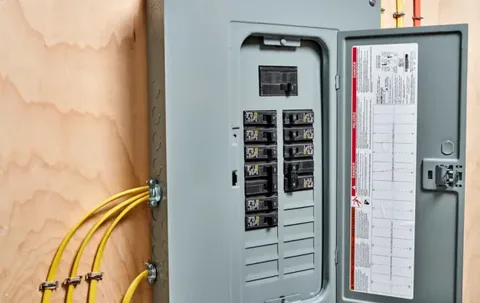
An electrical panel, also called a breaker box or service panel, distributes electricity to the circuits throughout your home. It also contains circuit breakers that help protect electrical circuits from overloads and certain faults.
As homes add modern appliances, heating and cooling systems, and electric vehicle (EV) chargers, their electrical needs can change. An older or damaged panel may not provide the capacity or safety features required for your current setup.
Understanding what an electrical panel does, why an upgrade may be necessary, and which warning signs to watch for can help you make informed decisions about your home’s electrical system.
What Is an Electrical Panel?
An electrical panel is the central distribution point for your home’s electrical circuits. Electricity enters through the service equipment and is distributed to individual circuits that power lights, outlets, appliances, and other electrical equipment.
The panel contains circuit breakers, which are designed to interrupt current when certain overloads or electrical faults occur. This helps protect the wiring and connected circuits from dangerous conditions.
Electrical panels are rated according to their specifications and capacity. The available electrical service determines how much power a home can draw safely, while the panel’s design and circuit configuration determine how that power is distributed.
Keeping the panel in good condition is important because electrical problems can affect the safety and reliability of the entire system.
Why Is an Electrical Panel Upgrade Necessary?
An electrical panel upgrade may be necessary when the existing equipment is damaged, outdated, unsuitable for the property’s electrical demand, or unable to support planned additions.
Here are some common reasons homeowners consider an upgrade.
1. To Support Modern Electrical Appliances
Today’s homes may use several high-demand appliances and systems, including electric ranges, clothes dryers, heat pumps, air conditioning systems, and EV chargers.
Adding this equipment can increase the home’s electrical demand. If the existing service does not have sufficient capacity, an electrician may recommend an electrical panel upgrade, a service upgrade, or an appropriate load-management solution.
A professional assessment helps determine whether the existing system can support the additional equipment safely.
2. To Address Safety Concerns
An old, damaged, or improperly installed electrical panel can present safety risks. Warning signs may include burning smells, visible scorching, unusual buzzing, corrosion, or breakers that repeatedly trip.
Some older panel models have also been associated with documented safety concerns. The condition and specific model of the equipment should be evaluated rather than assuming that every older panel is unsafe.
If you notice smoke, burning smells, or signs of overheating, do not remove the panel cover or attempt repairs yourself. Seek help from a qualified electrician, and contact emergency services if there is an active fire or immediate danger.
3. To Accommodate New Circuits and Electrical Projects
Home improvement projects can increase electrical requirements. A kitchen renovation, basement conversion, home addition, or new HVAC installation may require additional circuits or changes to the existing electrical distribution system.
An electrician can determine whether the panel has suitable space and capacity for the planned work. Depending on the findings, the solution may involve adding circuits, modifying the existing equipment, or upgrading the panel or electrical service.
Planning for these requirements before construction begins can help avoid unexpected electrical work later.
4. To Replace Outdated or Damaged Equipment
Electrical panels can deteriorate over time, particularly when exposed to moisture, corrosion, excessive heat, or improper installation.
Age alone does not automatically mean a panel needs replacement. However, damaged components, obsolete equipment, known safety concerns, or an inability to meet current project requirements may justify a professional evaluation.
If replacement is recommended, the electrician should explain the condition of the existing equipment and the reasons for the proposed work.
5. To Prepare for Future Electrical Needs
Homeowners may want to add an EV charger, install a heat pump, or convert certain appliances from gas to electricity in the future.
Evaluating the electrical system before these projects begin can help establish whether the existing service has sufficient capacity. In some cases, an electrical panel upgrade may be appropriate; in others, the existing equipment may be adequate.
The right solution depends on the calculated electrical load, the service configuration, and the equipment being installed.
Signs You May Need an Electrical Panel Upgrade
Certain electrical problems can indicate that your panel or another part of your electrical system needs attention.
Watch for these warning signs:
- Frequent circuit breaker trips: Repeated trips may indicate an overloaded circuit, faulty appliance, short circuit, or another electrical problem.
- Flickering or dimming lights: This can result from several issues, including loose connections, circuit overloads, or problems elsewhere in the electrical system.
- Burning smells or scorch marks: These may indicate overheating and should be treated as serious warning signs.
- Buzzing or unusual noises: Persistent buzzing from a panel may indicate a problem that requires professional inspection.
- Limited space for additional circuits: A full panel may require an appropriate solution before new circuits can be installed.
- Plans to install high-demand equipment: An EV charger, heat pump, or other major appliance may require a review of the home’s electrical capacity.
- An older or recalled panel: Certain models may have documented safety concerns that warrant assessment by a qualified electrician.
These symptoms do not automatically mean the entire panel must be replaced. An electrician can identify the underlying cause and recommend the appropriate repair or upgrade.
Does an Electrical Panel Upgrade Improve Energy Efficiency?
An electrical panel upgrade primarily addresses electrical distribution, equipment condition, and available capacity. Replacing a panel does not automatically reduce electricity consumption or lower energy bills.
However, an upgrade may be part of a broader home electrification project that includes installing a heat pump, EV charger, or other energy-efficient equipment.
Smart electrical panels and energy-management systems may also help homeowners monitor electricity use and manage certain electrical loads. Any potential savings depend on the equipment installed, household usage, electricity rates, and how the system is operated.
Before investing in an upgrade for energy-related reasons, ask an electrician to explain which benefits the proposed work is expected to provide.
How Can an Electrical Panel Upgrade Affect Home Value?
An updated electrical system may be useful when preparing a property for sale, particularly if the existing panel has known safety concerns or cannot support expected electrical needs.
Buyers may ask about the condition of the electrical system, permits for previous work, and available inspection records. Addressing documented electrical issues can help resolve concerns during a property transaction.
However, an electrical panel upgrade does not guarantee a specific increase in property value or a faster sale. The outcome depends on the property’s overall condition, local market conditions, and buyer expectations.
Homeowners should consider an upgrade based on the system’s condition and electrical requirements rather than assuming it will generate a particular financial return.
What Should You Consider Before Upgrading an Electrical Panel?
Before proceeding, consider the following factors with your electrician.
Electrical Load and Capacity
Discuss your existing appliances and any planned additions. A load calculation can help determine whether your current electrical service can support your needs.
Panel Condition and Compatibility
The electrician should inspect the existing panel, breakers, wiring connections, and relevant service equipment to identify any problems and determine the appropriate replacement options.
Permits and Inspections
Electrical panel work commonly requires permits and inspections, depending on the project and local jurisdiction. Confirm the requirements with your local building department before work begins.
Project Scope and Cost
Ask for an estimate that explains the proposed panel, labor, permits, and any additional work. Service conductors, meter equipment, or wiring repairs may add to the project cost if they are required.
Future Electrical Plans
If you expect to add an EV charger, heat pump, or other high-demand equipment, discuss those plans before selecting the replacement panel or service configuration.
For homeowners considering a replacement, our electrical panel upgrade service page provides a useful next step for learning about professional electrical services.
Frequently Asked Questions
What are the requirements for an electrical panel upgrade?
Requirements depend on the existing electrical system, the proposed work, and applicable local codes. The project may involve a replacement panel, compatible breakers, grounding and bonding corrections, or an electrical service upgrade. Permits and inspections may also be required.
Do I need to replace my home’s wiring when upgrading the electrical panel?
Not necessarily. Existing wiring may be retained if it is in suitable condition and appropriate for the electrical system. If the electrician identifies damaged wiring, unsafe connections, or other deficiencies, repairs or replacement may be necessary.
How long does an electrical panel last?
The lifespan varies according to the equipment, installation quality, environmental conditions, and maintenance history. Age alone does not determine whether a panel is safe, but older equipment should be evaluated if it shows signs of damage or has known safety concerns.
Will upgrading my electrical panel lower my energy bills?
Not automatically. A panel upgrade improves or changes the electrical distribution system, but it does not directly reduce the electricity used by appliances. Savings may result from separate energy-efficiency improvements or energy-management equipment, depending on how they are used.
Do I need a panel upgrade to install an EV charger?
Not always. An electrician should assess the existing electrical service, household load, and charger requirements. Depending on the available capacity, the installation may be possible without a service upgrade, or it may require an upgrade or an appropriate load-management solution.
Is an electrical panel upgrade the same as an electrical service upgrade?
No. A panel upgrade replaces or modifies the distribution equipment, while a service upgrade increases or changes the electrical service capacity or associated equipment. Some projects require both, but the scope depends on the property’s electrical requirements.
Schedule an Electrical Panel Assessment
An electrical panel upgrade may be appropriate when your existing equipment is damaged, lacks the capacity for planned electrical additions, or presents documented safety concerns. Understanding your system’s condition and requirements can help you choose the right solution.
Baldr Electric provides residential and commercial electrical services. If you are experiencing recurring electrical problems or planning to add new equipment, visit our electrical panel upgrade service page to learn more.
Contact Baldr Electric to discuss your electrical needs and arrange an assessment of your existing system.