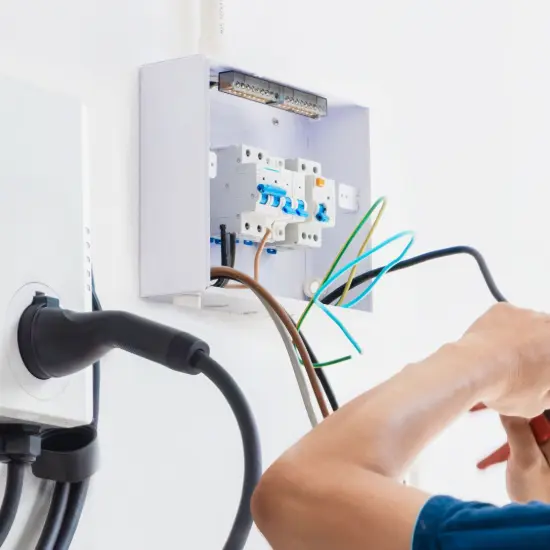
Installing a home electric vehicle (EV) charger can make charging easier and help you start each day with a charged vehicle. However, the total price depends on more than the charger itself. Your home’s electrical panel, the distance between the panel and parking area, wiring requirements, permits, and installation method can all affect the final cost.
The EV charger installation cost in New Hampshire typically ranges from $900 to $2,500 for a Level 2 home charger, including equipment and professional installation. Many straightforward installations fall between $1,000 and $1,600, while projects requiring major electrical work can cost more.
In this guide, Baldr Electric LLC explains the main costs, what can increase your installation price, how to choose between hardwired and plug-in chargers, and what New Hampshire homeowners should know before starting the project.
What Is the Average EV Charger Installation Cost in New Hampshire?
For many homeowners, a Level 2 charging station is a practical choice because it charges an EV faster than a standard household outlet. The following figures are general budgeting estimates, not fixed installation prices.
| Installation item | Estimated cost |
|---|---|
| Level 2 charger equipment | $400–$800 |
| Standard electrical installation and labor | $500–$1,500 |
| Permit and inspection fees | Varies by town and project |
| Typical total for a standard installation | $900–$2,500 |
| Electrical panel upgrade, if needed | $1,500–$4,000+ |
| Subpanel installation, if needed | $500–$1,500 |
These costs are not always added together as separate charges. For example, an electrician’s installation quote may already include wiring, labor, and permit handling. Ask for an itemized estimate so you can see what is included.
A simple installation with a suitable electrical panel and a short wiring route will generally cost less than a project involving a detached garage, long cable runs, trenching, or a panel upgrade.
Level 1 vs. Level 2 EV Charger: Which Costs More?
The type of charger you choose affects both the upfront cost and your daily charging experience.
Level 1 Charging
Level 1 charging uses a standard 120-volt household outlet. Many EVs come with a portable charging cord, so you may not need to purchase a separate charging station or install a new circuit if an appropriate outlet is already available.
A Level 1 charger is usually the least expensive option, but it charges slowly. It may work for plug-in hybrid vehicles, short daily commutes, or drivers who use very little battery power each day.
Before relying on an existing outlet for overnight charging, have an electrician confirm that the outlet, wiring, and circuit are suitable for the continuous electrical load.
Level 2 Charging
Level 2 chargers use a 240-volt supply and a dedicated circuit. They can add significantly more driving range per hour than Level 1 charging, depending on the charger’s power output and the vehicle’s charging capability.
A Level 2 charger is often a better fit for homeowners who drive regularly and want to recharge overnight. However, the installation normally requires a suitable circuit, properly sized wiring, and an assessment of the home’s electrical capacity.
For many New Hampshire homeowners, budgeting $900–$2,500 for a complete Level 2 installation is a reasonable starting point. The actual quote will depend on the property and the equipment selected.
What Does the EV Charger Equipment Cost?
The charging unit is only one part of the total installation price. Equipment costs vary based on charging speed, cable length, smart features, weather protection, and manufacturer.
For budgeting purposes, a residential Level 2 charger may cost approximately $400–$800, although some models fall outside this range.
When comparing chargers, consider:
- Charging output: Choose a charger that matches your vehicle’s charging capability and the electrical circuit available.
- Vehicle compatibility: Check the connector type and whether the charger supports your current EV. If you may change vehicles, consider future compatibility.
- Cable length: Measure the distance from the intended mounting point to the vehicle’s charging port when parked.
- Indoor or outdoor use: An outdoor charger needs an appropriate weather rating for its installation location.
- Smart features: Scheduling, energy monitoring, and utility-rate integration may help manage charging times and electricity costs.
- Safety certification: Choose equipment listed by a recognized testing laboratory and suitable for the intended installation.
Buying the cheapest charger does not always produce the lowest total project cost. Ask your electrician to confirm that the equipment works with your vehicle and home’s electrical system before purchasing it.
How Does the Distance From the Electrical Panel Affect Installation Cost?
The distance between your main electrical panel and the charger location is one of the biggest factors affecting labor and material costs.
Charger Installed Near the Main Panel
If your garage or parking area is close to the electrical panel, the electrician may be able to install the dedicated circuit with a relatively short wiring route. This usually reduces the amount of wire, conduit, and labor required.
Charger Installed Far From the Panel
If the charger must be installed on the opposite side of the house, in a distant garage, or outside, the electrician may need to run more wiring and conduit. The installation may also require additional drilling, wall repairs, or other work.
Charger Installed in a Detached Garage
A detached garage can require a more involved installation. Depending on the property, the electrician may need to install underground conduit, trench across part of the yard, or provide a suitable electrical supply to the garage.
These requirements can increase the price significantly compared with mounting a charger close to the existing panel.
Tip: Decide where you normally park your vehicle before requesting a quote. The best location should allow convenient charging while keeping the wiring route practical and safe.
Does Your Electrical Panel Have Enough Capacity for an EV Charger?
Your electrical panel supplies power to your home’s existing appliances, heating equipment, lighting, and other circuits. Adding an EV charger creates another substantial electrical load, so your electrician must determine whether the existing system can safely support it.
Homes With a 200-Amp Electrical Service
A home with a 200-amp service may have enough capacity for a Level 2 charger, but this is not guaranteed. The electrician still needs to evaluate the home’s electrical demand, panel condition, available circuit spaces, and charger requirements.
Homes With a 100-Amp Electrical Service
Older homes with 100-amp service may have less available capacity, particularly if they use electric heating, electric water heating, or other large appliances.
Depending on the load calculation, possible solutions include installing a compatible load-management device, adjusting the charging output, or upgrading the electrical service.
You do not automatically need a 200-amp panel simply because you want a Level 2 charger. The correct solution depends on the actual electrical load and the applicable requirements.
What Does an Electrical Panel Upgrade Cost?
A main panel or service upgrade may cost approximately $1,500–$4,000 or more, depending on the existing equipment, required capacity, utility coordination, permits, and installation complexity.
A subpanel may be another option when additional circuit space is needed, but it does not automatically increase the total electrical capacity available from the main service.
An electrician should assess the system before recommending either option. A load-management solution may be appropriate in some homes, potentially avoiding a more expensive upgrade.
What Additional Electrical Work Can Increase the Price?
Not every EV charger installation is a simple wiring job. Some homes need extra electrical work before a charger can be installed.
| Additional work | General cost consideration |
|---|---|
| New dedicated circuit | May add material and labor costs |
| New 240-volt receptacle | Depends on wiring, outlet, and circuit requirements |
| Subpanel installation | Approximately $500–$1,500 |
| Main electrical panel or service upgrade | Approximately $1,500–$4,000+ |
| Long wiring route | Higher material and labor costs |
| Trenching to a detached garage | Depends on distance, ground conditions, and restoration |
| Load-management equipment | Additional equipment and installation costs |
| Electrical repairs | Depends on the condition of the existing system |
A dedicated circuit may require only a modest amount of additional material when the panel has sufficient capacity and the wiring route is short. However, the full installed cost will also include labor and any required protective equipment.
Ask the electrician to identify necessary work separately from optional improvements. This makes it easier to understand the quote and avoid unexpected charges.
Hardwired vs. Plug-In EV Chargers: Which Is Better?
Level 2 chargers are commonly installed using either a hardwired connection or a properly installed 240-volt receptacle.
Hardwired EV Chargers
A hardwired charger connects directly to the electrical circuit rather than plugging into a receptacle.
Potential advantages include:
- Fewer connection points.
- A clean, permanent installation.
- Support for higher charging output when the equipment and circuit are rated for it.
- A suitable option for many outdoor installations.
The charger and electrical components must still be appropriate for the location and installed according to applicable requirements.
Plug-In EV Chargers
A plug-in charger connects to a compatible 240-volt receptacle installed for the charger.
Potential advantages include:
- The ability to unplug and relocate compatible equipment.
- Easier replacement of the charging unit in some situations.
- Flexibility for homeowners who may move or change their setup.
However, installing a suitable receptacle and circuit still costs money. The receptacle must be correctly rated for the charger’s load and intended use.
Which Option Should You Choose?
Neither option is automatically cheaper in every situation. The price depends on the charger, circuit, receptacle requirements, and installation location.
For a permanent outdoor charging station, hardwiring may be a practical choice. A plug-in charger may suit homeowners who value portability. Ask your electrician to compare both options for your specific property.
Do You Need a Permit to Install an EV Charger in New Hampshire?
A Level 2 charger generally requires new electrical work, such as installing a dedicated 240-volt circuit. Permit and inspection requirements depend on the scope of work and the local authority having jurisdiction.
Before work begins, confirm which permits and inspections apply to your property. Your electrician can help identify the applicable requirements and explain whether permit fees are included in the quote.
Proper permitting and inspection help verify that the installation meets applicable electrical safety requirements. They also provide documentation of the work performed.
When comparing quotes, ask:
- Are permit fees included?
- Who will obtain the permit?
- Is an inspection required?
- Will the electrician provide documentation when the work is complete?
Do not assume that every town in New Hampshire follows an identical process. Confirm the requirements for your installation location.
How Do New Hampshire Location and Weather Affect Installation Costs?
Labor availability, travel distance, and the property layout can affect the final quote.
In and around larger southern New Hampshire communities, homeowners may have several local electricians to compare. More remote properties, including some North Country and mountain locations, may involve additional travel or fewer available contractors. These are possible cost factors, not fixed price differences for every town.
New Hampshire’s cold winters also matter when choosing the equipment and mounting location.
For outdoor installations, check that the charger is rated for the expected temperature range and outdoor conditions. Consider cable flexibility in cold weather, weather-resistant enclosures, and a location that allows convenient access after snow or ice.
If the property is near the coast, discuss any additional environmental exposure with the installer and select equipment with an appropriate rating.
The most useful way to estimate your cost is to have the electrician review the actual panel, wiring route, parking location, and outdoor conditions rather than relying only on a statewide average.
Are There EV Charger Rebates or Incentives in New Hampshire?
Incentives may reduce the upfront cost or ongoing cost of home charging, but eligibility depends on the program, utility provider, installation, and application requirements.
New Hampshire Electric Cooperative Incentive
New Hampshire Electric Cooperative (NHEC) has published a 2026 residential EV charging program offering $300 per qualifying Level 2 charger, up to $600 per property, subject to program terms and available funding.
The program requires eligible residential members to participate in its EV time-of-use rate. Applications must be approved before installation, and the program includes installation, inspection, documentation, and deadline requirements. Check the current NHEC program terms and conditions before purchasing equipment or scheduling work. Eligibility is not automatic.
Other Utility Programs and Off-Peak Rates
If your home is served by Eversource New Hampshire, Liberty, Unitil, or another utility, check the provider’s official website for current EV charging programs and available rate options.
Some programs may offer time-of-use rates that make charging at certain hours less expensive. The savings depend on the rate structure, your charging schedule, and the utility’s current terms.
Do not assume that a rebate or special rate offered by one utility is available to all New Hampshire homeowners.
Has the Federal EV Charger Tax Credit Expired?
Yes. The federal Section 30C credit for qualifying residential EV charging equipment is no longer available for installations placed in service after June 30, 2026. The IRS confirms that the relevant deadline was June 30, 2026.
Homeowners considering an installation now should not include this expired credit in their expected savings. For details, review the IRS guidance on the Alternative Fuel Vehicle Refueling Property Credit.
How Can You Keep Your EV Charger Installation Cost Down?
You can control some installation expenses by planning ahead.
- Choose a practical mounting location. A location near the electrical panel may reduce wiring and labor costs, provided it also works for parking and charging.
- Check panel capacity before buying a charger. An electrician can help identify potential upgrades before you commit to equipment.
- Compare hardwired and plug-in options. Ask for a quote based on both methods if your property can support either one.
- Choose suitable charging output. A higher-output charger may not provide a meaningful benefit if your vehicle cannot use the extra power.
- Ask for an itemized quote. Separate equipment, wiring, labor, permits, and optional electrical upgrades.
- Check incentives before installation. Some utility programs require preapproval, so applying after the work is finished may make you ineligible.
- Consider future electrical needs. If you may add another EV or other large electrical equipment, discuss your plans during the initial assessment.
Avoid choosing an installer based on price alone. Correct circuit sizing, suitable wiring, safe connections, and compliance with applicable electrical requirements matter for a charger that may operate for hours at a time.
What Should You Expect During EV Charger Installation?
A typical installation follows several steps.
1. Electrical assessment: The electrician reviews your panel, service capacity, vehicle requirements, and preferred charger location.
2. Equipment selection: You choose a compatible charger and decide whether a hardwired or plug-in installation is suitable.
3. Quote and permits: The electrician explains the work, costs, and applicable permit or inspection requirements.
4. Wiring and installation: The electrician installs the circuit and required components, routes the wiring, and mounts the charger.
5. Testing and inspection: The completed installation is checked for proper operation and compliance with applicable requirements.
A straightforward installation may be completed in a few hours, while complex wiring, trenching, panel upgrades, or inspection scheduling can extend the project. Ask for a time estimate based on your home’s actual conditions.
Frequently Asked Questions
How much should it cost to install an EV charger at home?
A standard Level 2 home EV charger installation in New Hampshire typically costs around $900–$2,500, including equipment and professional installation. Many straightforward projects fall between $1,000 and $1,600. Extra wiring, trenching, or electrical upgrades can increase the total.
How much should it cost to have an EV charger installed?
The cost depends on whether you already have a suitable circuit and enough electrical capacity. A short wiring run near the main panel will generally cost less than installing a charger in a detached garage or upgrading the electrical service.
Is it expensive to install an EV charger at home?
It does not have to be, especially if your home has sufficient electrical capacity and the charger can be installed near the panel. The price can rise considerably if the project requires a panel upgrade, extensive wiring, or underground conduit.
Do I need a 200-amp panel for a Level 2 EV charger?
Not necessarily. Some homes with 100-amp service can support a charger, depending on the existing electrical load and the installation design. A licensed electrician should perform a load assessment before deciding whether a panel upgrade or load-management solution is needed.
Is a hardwired EV charger better than a plug-in charger?
Both can be suitable when installed correctly. Hardwired chargers provide a permanent connection, while plug-in chargers can offer more flexibility when relocating equipment. The best choice depends on your charger, circuit, location, and future plans.
Do I need a permit to install a home EV charger in New Hampshire?
Electrical permits or inspections may be required for the new circuit and associated work. Requirements depend on the local authority and project scope, so confirm them before installation begins.
Is the IRS tax credit for EV charger installation still available?
The federal Section 30C credit expired for property placed in service after June 30, 2026. Homeowners planning an installation after that date should not assume they qualify for the former residential credit. Check current IRS guidance for details.
Can I receive a rebate for installing an EV charger in New Hampshire?
Possibly. NHEC has published a qualifying residential program offering $300 per charger, up to $600 per property, subject to program terms and funding. Other utility programs may differ. Check eligibility and application requirements before purchasing or installing your charger.
How long does home EV charger installation take?
A straightforward Level 2 installation may take a few hours. Projects involving long wiring runs, trenching, panel upgrades, or additional permitting and inspection steps can take longer.
Will a home EV charger increase my electricity bill?
Yes, charging your vehicle uses electricity, but the increase depends on how much you drive, your vehicle’s efficiency, and your electricity rate. Some utility rate options may make scheduled off-peak charging less expensive. Check your provider’s current rates before estimating savings.
Get Help With Home EV Charger Installation in New Hampshire
Planning a home charging station starts with understanding your vehicle, electrical panel, and preferred parking location. A proper assessment helps identify the equipment and electrical work needed before the project begins.
Baldr Electric LLC provides residential and commercial electrical services, including EV charging, wiring, and electrical panel upgrades. If you’re planning a Level 2 charger, contact the team to discuss your installation and the requirements for your property.
Baldr Electric LLC
Phone: (603) 456-9125
Email: info@BaldrElectric.com
Website: baldrelectric.com
Request an estimate to understand the expected installation cost, required electrical work, and suitable charging options for your home.