Choosing between a 100-amp and a 200-amp electrical panel is an important decision for homeowners who want a safe, reliable electrical system. The right panel size determines how much electrical power your home can receive and distribute to appliances, lighting, heating and cooling equipment, and other devices.
A 100-amp electrical service may be sufficient for a smaller home with modest electricity needs. However, a 200-amp service can provide more capacity for modern appliances, electric vehicle (EV) chargers, heat pumps, and future home improvements.
If you live in Concord, NH, or a surrounding community, understanding the difference between these two electrical service sizes can help you determine whether your existing system meets your household’s needs. Baldr Electric LLC provides electrical services, including panel upgrades, to help homeowners address their electrical capacity requirements.
In this guide, we explain how 100-amp and 200-amp electrical panels compare, what each can support, when an upgrade may be necessary, and how an electrician determines the right size for your home.
What Is an Electrical Panel?
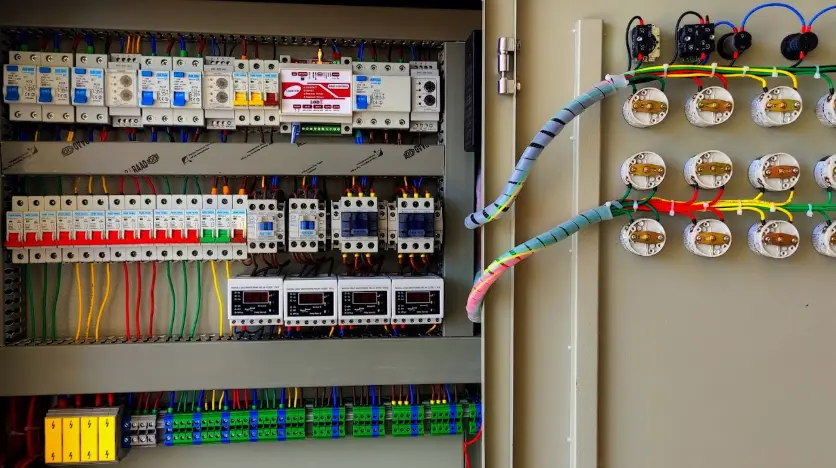
An electrical panel, also called a breaker panel or service panel, distributes electricity throughout your home. It receives power from the utility service and directs it to individual circuits that supply outlets, lighting, appliances, and other electrical equipment.
Circuit breakers protect these circuits by interrupting the flow of electricity when an overload or short circuit occurs. The main breaker, when present, also provides a way to disconnect power to the panel.
It is important to understand that electrical service capacity and the number of available circuit spaces are two different things. A panel may have empty breaker spaces but still lack sufficient electrical capacity to support additional high-demand equipment. Conversely, a home may need more circuit spaces without necessarily needing a larger service.
The correct solution depends on both the electrical service rating and the home’s calculated power requirements.
What Is the Difference Between a 100-Amp and a 200-Amp Electrical Panel?
The primary difference is the amount of electrical current the service is designed to deliver.
A 100-amp service is rated for up to 100 amperes, while a 200-amp service is rated for up to 200 amperes. For a typical 120/240-volt residential service, these ratings correspond to nominal capacities of 24,000 watts and 48,000 watts, respectively.
These figures represent theoretical capacity at the stated voltage, not a guarantee that every appliance can operate simultaneously at its maximum rating. The actual usable capacity depends on the electrical service, connected loads, circuit design, and applicable electrical requirements.
A 200-amp service can be particularly useful when a household uses multiple high-demand appliances or plans to add equipment such as an EV charger or electric heating system.
100-Amp vs. 200-Amp Electrical Panel: Quick Comparison
| Feature | 100-Amp Service | 200-Amp Service |
|---|---|---|
| Nominal capacity at 240 volts | 24,000 watts | 48,000 watts |
| Electrical current rating | 100 amps | 200 amps |
| Typical applications | Smaller or lower-demand households | Higher-demand and all-electric households |
| Major electric appliances | May require careful load planning | Generally offers more capacity |
| EV charger installation | May require load management or an upgrade | Often offers more flexibility, subject to a load calculation |
| Heat pump installation | Depends on existing and proposed loads | Usually provides more capacity for additional equipment |
| Future renovations | Less room for additional electrical demand | More flexibility for future electrical projects |
| Circuit spaces | Depends on the panel model | Depends on the panel model |
| Installation cost | Depends on the project scope | Usually higher if more extensive service work is required |
| Best choice | Homes whose calculated loads fit within the service rating | Homes needing greater electrical capacity |
Important: A 200-amp service does not automatically make every installation suitable for EV charging, heat pumps, or other equipment. An electrician must evaluate the actual electrical loads and installation requirements.
What Can a 100-Amp Electrical Panel Handle?
A 100-amp electrical service can support many household electrical needs when the home’s total calculated demand is within its capacity.
It may be suitable for a smaller home or a property that uses natural gas or propane for major heating, cooking, and water-heating needs. The number of occupants and the home’s square footage are useful considerations, but neither determines the required service size by itself.
Appliances and equipment a 100-amp service may support
Depending on the home’s electrical load, a 100-amp service may supply:
- Lighting and standard household outlets.
- Refrigerators, televisions, computers, and other electronics.
- Washing machines and dishwashers.
- Electric ranges and clothes dryers.
- Central air conditioning or smaller heat pump systems.
- Water heaters and other major appliances.
The important consideration is not simply how many appliances are connected. It is how much electricity the home may demand at the same time, calculated according to applicable electrical code requirements.
For example, a home with a gas furnace, gas water heater, and gas range may have substantially different electrical demands from a home with electric resistance heating, an electric range, an electric dryer, and an EV charger.
Limitations of a 100-amp electrical service
The main limitation is reduced capacity for additional high-demand equipment.
Adding a Level 2 EV charger, a heat pump, an electric water heater, or other major loads may require a closer assessment of the existing service. Depending on the calculated demand, the homeowner might need a service upgrade, a different equipment arrangement, or an approved load-management solution.
A 100-amp service should not automatically be considered inadequate just because it is older. Its suitability must be established by evaluating the actual electrical system and the loads it serves.
What Can a 200-Amp Electrical Panel Handle?
A 200-amp service provides twice the nominal current capacity of a 100-amp service at the same voltage. This additional capacity can make it easier to support modern household electrical demands.
A 200-amp service is often considered for homes with several major electric appliances, larger heating and cooling systems, or plans for additional electrical equipment.
Benefits of a 200-amp electrical service
More capacity for major appliances
A higher service rating can provide greater flexibility when multiple high-demand appliances are operating. The actual supported load still needs to be calculated.
Greater flexibility for EV charging
Level 2 EV chargers can draw substantial current. A 200-amp service may make installation easier, but the charger’s rating, existing household demand, and service configuration must all be evaluated.
Support for electric heating and cooling
Heat pumps, electric furnaces, and other HVAC equipment can add significant electrical demand. A larger service may help accommodate these loads, depending on the system design.
More options for future renovations
If you plan to finish a basement, add living space, replace gas appliances with electric alternatives, or install additional equipment, having sufficient electrical capacity can simplify planning.
Potentially fewer service-related limitations
A properly sized service can reduce the likelihood that future projects will require another capacity upgrade. However, a 200-amp service does not eliminate ordinary circuit overloads or the need for correctly sized branch circuits.
How Much Electrical Capacity Do Common Appliances Need?
Appliance requirements vary considerably by model, voltage, and operating conditions. The following table provides illustrative examples to show why an electrician must evaluate the complete electrical load rather than add together general appliance estimates.
| Appliance or equipment | Illustrative electrical demand | Why it matters |
|---|---|---|
| Refrigerator | Relatively low; varies by model | Usually a modest part of total household demand |
| Electric clothes dryer | Often several kilowatts | Can contribute significantly to household load |
| Electric range | Several kilowatts, depending on use and model | May create substantial demand during cooking |
| Electric water heater | Commonly around 4.5 kW for some tank models | Adds a significant electrical load |
| Heat pump | Varies widely by system and operating conditions | Compressor and auxiliary heat requirements matter |
| Level 2 EV charger | Often 7.2–11.5 kW for common residential configurations | May operate for extended charging periods |
| Electric resistance furnace | Can have a high demand depending on its rating | May strongly influence service sizing |
These are general examples, not a sizing calculation. Actual amperage depends on equipment nameplate ratings, voltage, operating conditions, and applicable demand factors. Some loads operate intermittently, while others may run for extended periods.
A licensed electrician can perform a residential load calculation to determine whether your service can accommodate existing appliances and proposed additions.
Is a 100-Amp Electrical Service Enough for Your Home?
A 100-amp service may be sufficient if your household’s calculated electrical demand remains within its capacity and you do not expect substantial additional loads.
When a 100-amp service may be suitable
It may be a reasonable option when:
- Your household has relatively modest electrical demand.
- Major heating, cooking, and water-heating equipment uses gas or propane.
- Your existing electrical system is in good condition.
- You do not plan to add several high-demand appliances.
- A professional load calculation confirms that the service is adequate.
A smaller home is not automatically suitable for 100-amp service, just as a larger home does not automatically require 200 amps. The appliances and calculated demand matter more than square footage alone.
When a 100-amp service may need further evaluation
Consider an electrical assessment if you plan to:
- Install a Level 2 EV charger.
- Replace a fossil-fuel heating system with a heat pump or electric furnace.
- Install a high-demand electric water heater.
- Add a substantial new living area or other major electrical loads.
- Electrify several appliances at the same time.
These projects may fit within an existing 100-amp service in some circumstances, but others may require an upgrade or an approved load-management arrangement.
When Should You Upgrade From 100 Amps to 200 Amps?
An upgrade may be appropriate when your existing service cannot accommodate the home’s calculated electrical demand or planned equipment.
1. You are installing an EV charger
A home EV charger can add a significant electrical load, especially when it operates alongside other major appliances. Before installation, an electrician should check the service capacity, panel configuration, and charger’s electrical requirements.
A 200-amp service may be the right solution, but it is not the only possible option. Depending on the circumstances, approved load management or another compliant design may also be possible.
2. You are installing a heat pump
Heat pumps can help reduce reliance on conventional heating fuels, but their electrical requirements vary by equipment type, capacity, and climate. Backup or auxiliary electric heat may increase demand substantially.
A service assessment can establish whether your current panel and electrical service can support the proposed system.
3. You are renovating or expanding your home
A kitchen remodel, finished basement, room addition, or conversion to all-electric appliances can increase electrical demand. Reviewing service capacity before work begins helps identify potential upgrades early.
4. You need additional electrical circuits
If the panel lacks breaker spaces, you may need a different panel configuration. However, adding circuit spaces and increasing service capacity are separate issues.
An electrician can determine whether the appropriate solution is a panel replacement, an additional approved panel, a service upgrade, or another arrangement that complies with applicable requirements.
5. Your existing equipment shows signs of an electrical problem
Frequent breaker trips, a burning smell, buzzing, visible damage, or unusual heat around a panel should not be ignored. These symptoms do not automatically prove that a 100-amp service is too small, but they warrant prompt professional evaluation.
If you notice smoke, active sparking, or a burning smell, keep away from the equipment and contact emergency services if there is an immediate fire risk. Do not remove the panel cover or attempt repairs yourself.
Does a 200-Amp Panel Cost More Than a 100-Amp Panel?
A 200-amp installation generally costs more when it requires larger service equipment, upgraded conductors, utility coordination, or additional electrical work. However, the final cost depends on the condition of the existing system and the project’s scope.
Factors that affect the price include:
- The panel and service equipment selected.
- Whether the meter socket or service entrance conductors must be replaced.
- The condition and accessibility of existing wiring.
- Grounding and bonding requirements.
- Permit and inspection fees.
- Utility coordination and any required service work.
- Additional circuits or modifications requested by the homeowner.
Replacing an existing panel with a similar-rated panel is different from increasing the service from 100 amps to 200 amps. A service upgrade can involve more extensive work than replacing the panel enclosure alone.
Rather than relying on a generic online price, request an itemized estimate based on your home’s electrical system and the work required.
Can You Keep a 100-Amp Panel and Still Install Modern Electrical Equipment?
Sometimes. An upgrade is not always necessary when adding new electrical equipment.
An electrician may evaluate the possibility of using approved load-management equipment, adjusting the charging rate of an EV charger, or selecting compatible equipment with lower electrical demand. The feasibility of these options depends on the equipment, existing service, applicable code requirements, and the calculated load.
This is particularly relevant for homeowners who want to install a heat pump or EV charger without undertaking a more extensive service upgrade.
However, load management should never be improvised. It must be designed and installed according to the applicable requirements and the equipment manufacturer’s instructions.
How Does an Electrician Determine the Right Panel Size?
The appropriate service size is determined through an assessment of the property’s electrical requirements, not simply by looking at the number of breaker spaces or the home’s age.
A professional evaluation generally considers:
- Existing service rating: The electrician verifies the service equipment, main breaker rating, and relevant conductors.
- Current electrical loads: Existing appliances, HVAC equipment, and other electrical demands are identified.
- Future plans: Proposed EV chargers, heat pumps, renovations, and other additions are considered.
- Load calculation: The electrician applies the appropriate residential load-calculation method and demand factors.
- Equipment condition and compliance: The existing panel, wiring, grounding, and related equipment are evaluated.
- Upgrade options: If additional capacity is required, the electrician explains suitable solutions and any permitting or utility requirements.
This process helps establish whether the existing service is adequate, whether a 200-amp upgrade is appropriate, or whether another compliant solution can meet the homeowner’s needs.
Frequently Asked Questions
Is a 200-amp electrical panel twice as powerful as a 100-amp panel?
A 200-amp service has twice the nominal current capacity of a 100-amp service at the same voltage. At 240 volts, their theoretical capacities are 48,000 watts and 24,000 watts, respectively. Actual usable capacity depends on the installation and calculated electrical demand.
Does every modern home need a 200-amp electrical panel?
No. Many homes benefit from 200-amp service, but the correct size depends on the home’s electrical loads, equipment, and future plans. A professional load calculation determines the appropriate service rating.
Can a 100-amp panel support a heat pump?
It can in some homes. The heat pump’s electrical requirements, auxiliary heating, and other household loads determine whether the existing service has sufficient capacity.
Can I install a Level 2 EV charger with a 100-amp service?
Possibly. An electrician must assess the existing service and the charger’s demand. An approved load-management solution may be an option, while other installations may require a service upgrade.
Does a 200-amp panel provide more breaker spaces?
Not necessarily. Service amperage and the number of breaker spaces are different specifications. The number of spaces depends on the panel’s design and model, so check the manufacturer’s specifications when comparing panels.
Will upgrading to 200 amps lower my electric bill?
Not by itself. A larger service provides more electrical capacity; it does not automatically reduce the electricity consumed by your appliances. Energy savings depend on equipment efficiency, usage, utility rates, and other factors.
How long does a 100-amp to 200-amp service upgrade take?
The physical work may take a day or longer, depending on the installation and any required modifications. Scheduling, utility coordination, permitting, inspections, and equipment availability can extend the overall project timeline.
Is a 100-amp electrical panel unsafe?
No. A properly installed and maintained 100-amp service can be safe when it is suitable for the home’s electrical demand. Problems arise when equipment is defective, circuits are improperly installed, or the service cannot safely support the connected loads.
Choose the Right Electrical Panel for Your Home
The difference between a 100-amp and a 200-amp electrical panel comes down to electrical capacity and the demands placed on your home’s system. A 100-amp service may be adequate for a lower-demand household, while a 200-amp service can provide greater flexibility for EV charging, heat pumps, electric appliances, and future renovations.
The best choice depends on your existing equipment, calculated electrical load, and plans for your property. Before committing to an upgrade, have a qualified electrician evaluate the system and explain the options available.
Baldr Electric LLC offers panel upgrade services for homeowners who need to evaluate or improve their electrical capacity. If you are planning an EV charger installation, a heat pump, or another major electrical project in Concord, NH, or the surrounding area, contact Baldr Electric LLC to discuss your electrical needs and determine whether a panel upgrade is appropriate for your home.